
Fractals in our body: cardiovascular system.
“In the bloodstream, there is chaos, but not anarchy or randomness”. This statement by Ricardo Armentano, Dean of the Faculty of Engineering, Exact and Natural Sciences, Favaloro University (Argentina), explains why fractal techniques and chaos theory help to create early detection systems for cardiovascular diseases. How cardiovascular engineering can help medicine improve its diagnoses and understand how this system works was the focus of the lecture given by this expert at the Biomedical Technology Center of the Polytechnic University of Madrid (UPM). We spoke with him about this lecture and the results of his research.
Question: What is the fractal nature of the cardiovascular system?
Answer: The way the body manages to control blood pressure in the arteries is among the most complex phenomena in nature. The arterial network branches into millions of vessels that are subdivided down to their smallest expression, so that each cell receives the exact amount of nutrients it needs for its vital functions promptly. The circadian rhythm, respiration, or cardiac cycles mark a periodicity for the organism and organize it in time, but this periodicity is not exactly a regularity. In the bloodstream, there is chaos, but not anarchy or randomness. The accelerations of the rhythm and the forces that the organism deploys to counteract them in real-time, whether in the head or on the tips of the toes, are manifested in the arterial flow as accidents in the waveform, noises, complaints, and vagaries of the signal.
Q: How does the fractal nature of the cardiovascular system influence our ability to detect disease early?
A: In ancient times, even before physicians in the East and West had taken such disparate paths, Chinese physicians tried to translate those hermetic signals given by flowing life into a language with which they could diagnose and treat the sick. That which is in full health is usually more complex than that which is sick. Today we have high-tech diagnostic methods and on this basis, we are looking for early markers of many non-communicable diseases.
What has surprised physicians is that with these fractal techniques and with Chaos Theory it is possible to find early markers of disease in a very simple way, because the tools measure biological complexity and allow us to see when we are moving away from it. The geometry of disease is more Euclidean – with its straight lines and curves, typical of the world of the ideal – and less fractal, less prone to acquiring the laborious forms such as symmetries, infinitesimal arabesques, and other whims that living matter does develop.
Q: Your work has focused on the study, using laboratory models, of how poverty, poor nutrition, and the environment can increase our propensity to suffer cardiovascular disease. What are the most relevant conclusions you have reached?
A: Health and disease are biopsychosocial phenomena in which biological, social, environmental, psychological, health, etc. factors intervene, which are too heterogeneous to fit them into a single deterministic equation and establish, for example, the causes of chronic disease. On the other hand, it is well known that there is a strong correlation between an individual’s income and his or her cardiovascular risk due, among other things, to poor diet. We say that our approach goes from the cell to the bench where the patient is sitting, trying to develop low-cost technology applicable on a large scale for the early detection of cardiovascular diseases. In developing countries, it is very important to reach out to measure children in schools and use internet connectivity to assess the whole family group. Our analysis is systematically applied to university students and their immediate family members.
Q: How do disciplines such as physics, mathematics, or engineering contribute to the study of cardiovascular diseases?
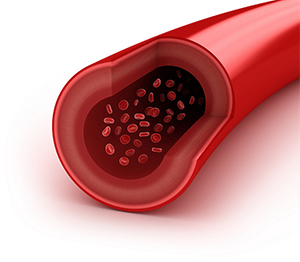
A: Cardiovascular engineering integrates elements of biology, electrical engineering, mechanical engineering, mathematics, and physics to describe and understand the cardiovascular system. Its goal is to develop, test, and validate a predictive and quantitative interpretation of the cardiovascular system at an appropriate level of detail, and to apply resulting concepts toward the solution of various pathologies. The dynamics of the cardiovascular system characterize the heart and vascular system as a whole and comprise the physics of the circulatory system including the container (the arterial walls) and the content (blood), as well as the interrelationship between the two. The arterial wall and blood contain essential information about the physiological state of the entire circulatory system, while the interdependence of these components is related to complex processes that could explain the formation of lesions in the vascular wall, such as atheroma plaques, or the increase in wall stiffness as described in arterial hypertension.
Q: What prompted you to give this conference at the UPM? What is your connection with the CTB and what does it mean for you to explain the results of your work to its researchers?
A: It is the fruit of almost a decade of cooperation between the UPM and the Favaloro University of Buenos Aires, which includes the exchange of professors and students through two Collaboration Networks. There are currently major lines of work such as biomechanics, biosensors, and telemedicine that could have the CTB as the flagship of research and development. Moreover, exposing our ideas in a forum of colleagues with a high level of knowledge is a challenge and a validation test of them, a new possibility to find valuable partners in this adventure of thinking.
Original page https://www.upm.es/e-politecnica/?p=3307

0 Comments