
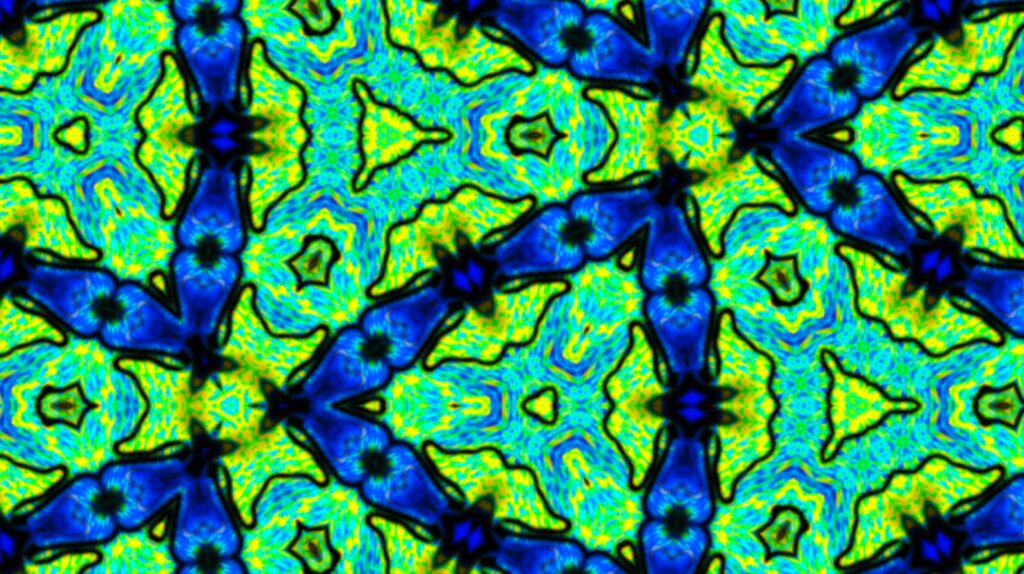
What is a fractal?
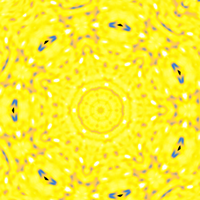
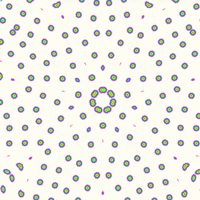
A fractal is a pattern in nature that repeats over and over again over a period of time.
Because of the repetitive nature of fractals, they look the same on both large and small scales.
Fractals are just as similar up close as they are from afar. Fractals are an important part of the nature that exists around us, yet most people are completely unaware of the existence and significance of fractals.
Some of the most common examples of fractals in nature include tree branches, animal circulatory systems, snowflakes, lightning bolts, plants and leaves, landforms, river systems, clouds, and crystals.
Knowledge of the fractal model can enable us to understand the present based on the past and predict the future based on the past and present.
Today, the science of fractals is used in stock market analysis and forecasting.
Fractals in human life
We humans are made up of fractal systems such as our lungs, circulatory system, nervous system, and brain neurons.
Our behavioral patterns are also fractal in nature, both in individuals and from generation to generation.
Fractal patterns are part of the mathematics of the universe and are commonly found everywhere in nature, from the smallest snail shell to the largest galaxy.
Fractals form in nature due to an ancient principle called the path of least resistance.
This process can be seen in the path of electricity in lightning or in the path of ants, which are used as a protocol in networked systems today.
Trees form fractals of growth with repeating patterns created by large main branches repeating in smaller branches and smaller branches repeating in smaller branches.
Human biological systems are more complex but follow the same natural fractal growth pattern as trees and leaves.
These biological systems include:
Human lungs.
In 2020, the Department of Biomedical Engineering at Boston University published a new study that examined the fractal patterns that make up the structure of human lungs.
The lungs are a prime example of a fractal system in the human body.
The bronchi of the lungs, which have an almost tree-like structure, branch from the trachea (trunk) to the outer bronchioles (branches) to the outermost alveoli (leaves)
The goal of this study was to better understand chronic obstructive pulmonary disease (COPD).
Ultimately, the experts who conducted the study found that understanding the fractal nature of lung structure can improve our understanding of the underlying mechanisms that contribute to the progression of the disease.
Cardiovascular System.
In 2017, Dr. Gabriella Captur conducted a study on the fractal structure of the cardiovascular system that was published by the National Center for Biotechnology Information.
Dr. Gabriella Captur concluded that the cardiovascular system exhibits fractal structure at every level.
Human Nervous System.
The central nervous system begins in the brain, travels through the “main artery” in the spine, and then branches into the peripheral nervous system.
Human cells.
The key to understanding fractals is that they always follow the same principles.
Human structures such as the lungs, nervous system, and circulatory system are formed according to fractal patterns.
Human cells are the building blocks of our entire physical structure.
Following the true natural laws of fractals, it makes sense that smaller fractals form the building blocks of larger fractals.
Human cells organize themselves into fractal branching clusters.
Brain neurons.
A new study published in 2021 University of Massachusetts Dartmouth, a new way to study brain networks using the mathematical principles of fractals.
The Dartmouth study shows that brain networks are organized similarly to fractal geometry.
Dr. Lucy L. W. Owen found that the structures of brain networks are organized into fractal structures. When thoughts are disturbed, the fractal patterns become disorganized and lose their integrity.
Fractals in human behavior.
Experts believe that our behavior is a pattern.
Fractals have made their way into our lives.
The people you meet.
Your reactions to the situations you find yourself in.
How you receive information and how you cope with difficulties and stress.
These are all patterns of behavior.
Once you become familiar with fractals, you will notice fractals in different behavioral scenarios, and knowing these fractals can be very productive.
Behavior patterns (personality fractal) For example, our ego governs our perception of the people we meet, the jobs we choose, how we respond to criticism, and how we deal with external factors.
Letting go of the ” ego ” is one solution that will have a fractal impact on many areas of life.
Behavioral patterns affect our mood, thinking, and overall frequency.
Recognizing fractal behavior patterns can reveal other patterns that we are subconsciously unaware of.
To understand how fractals have entered our lives, let’s try to look at our information processing patterns, how we approach relationships, and how we respond to fractals, and do so in the blink of an eye.
It only takes the human brain 50 milliseconds to recognize the presence of fractals.
Our brains need more time to process today’s architectures!
As soon as we look at nature, it triggers a cascade of automatic reactions, in Taylor’s words, even before we realize what we are looking at, we are already reacting to it subconsciously.
People experience less stress and feel better about themselves when looking at nature, and fractals contribute to this.
Taylor’s research has shown that fractals can reduce stress and mental fatigue by 60%.
Taylor also points to studies showing that hospital patients can heal faster if they have access to a window overlooking nature because by looking at nature, they can see all natural fractals. This treatment helped the patients to relax their body and recover faster.
This research group believes that people need beautiful nature to maintain their health. But cities and modern architecture are not designed to interact with nature or fractals.
Instead, we see box-like buildings, with mindless designs and far from architectural art, houses without nature (fractals).
Psychedelics and Fractals (Augmented Perception and Fractals)
In general, the effects of psychedelics on the human brain, consciousness, and perception are notable and we will not go into detail but will look at fractal patterns in this section
During shamanic journeys and spiritual ceremonies, people experience a wide range of visual effects.
These effects can be light or quite intense.
They may contain stunning displays of colors, geometry, symbols, images, scenes, etc.
These people report seeing complex and infinite structures of dimensions that appear to be the same and intertwined no matter how deeply they look.
The components of these fractal patterns are the same as the whole and they show the interconnectedness and infinity of the present experience.
An experience we now know as life or the illusion of life.
Psychedelics have long been associated with spiritual and ancient ceremonies, these plants commonly existed in most geographical regions. Uses include medicinal mushrooms in Mexico, North America, and Europe, roots of plants containing (DMT) in South America, ancient Egypt, and the Middle East, ephedra (Hum) in Iran, China, and ancient India, etc. (DMT is controlled in Schedule I of the Controlled Substances Act. The information is published for general overview, with no recommendations for use in any way!)
These plants are known to alter perception as a window to go beyond the normal and routine perception and “thinking of modern man, in a ritual they called the inner journey”.
The brain does not create these images, by altering the level of perception with psychedelics, we can only see what has always been there. Studies have shown that taking psychedelics actually creates a brain overload, revitalizing key, deactivated networks and temporarily shutting down the default mode network (DMN).
(DMT is controlled in Schedule I of the Controlled Substances Act. The information is published for general overview, with no recommendations for use in any way!)
However, when one is freed from the shackles of perception, one sees life as it is, infinite. In this case, the observer may experience images of fractals with geometric shapes that are self-generating and repetitive if these fractals are a form of information related to the observer’s perception and exchange of information.
Altered perception and fractals are not mind games or random geometric shapes,
but rather representations of the infinity of life and our connection to the world around us.
A sense of self and difference from others is created in the brain. In the words of neuroscientist Anil Seth, “The brain hallucinates consciousness.” Hence, what we perceive as “normal” in the world are functions of the brain.
However, there have been times when the normal functioning of the brain has been altered to reduce the boundaries of the ” ego ” and its emotions, even if only slightly.
When natural human perception is disrupted, a higher dimension temporarily opens up. Thinning the barrier separating body and soul opens a dimension beyond time and space, such as sleep. Shamans believe this is the spiritual realm of reality.
Given that our consciousness is actually a function of the brain, these new networks create an alternate consciousness and reality.
Fractals are a formula for nature itself and represent the unity of the world at large.
The fractal patterns we see in shamanic rituals are nature’s images of beauty, potential, infinity, and the dimensionless quality of love and unity. The oneness of all of us is subject to physical barriers such as time and space, but the feeling of love between two people can be constant regardless of the distance between them.
Fractals are common visual visions and their formula reflects the dynamics of life.
They are a visual representation of the unity and infinity of all life!

0 Comments